

Behind the Chair With Michelle Obama’s Hair Stylists – Blavity
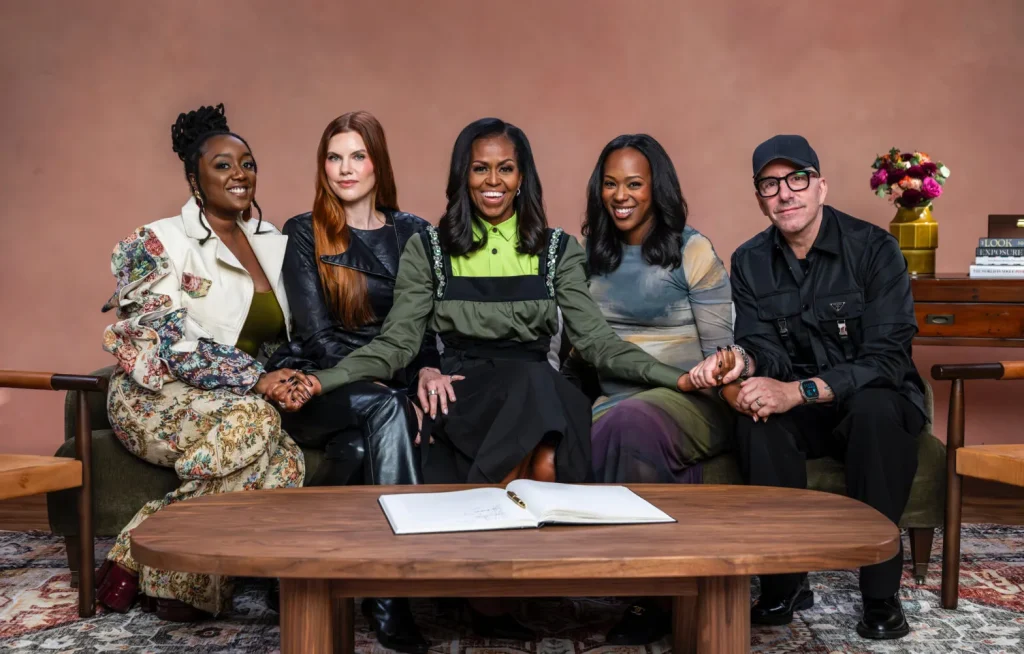
For Black women, the salon has always been more than a place to get their hair done. It’s where they unpack life, affirm their beauty, and prepare themselves to show up in a world that constantly asks them to prove they belong. For Yene Damtew and Njeri Radway, two of the trusted hands behind Michelle Obama’s most iconic hairstyles, that truth has guided their work long before the spotlight ever found them.
Hair Was Never “Just Hair”
Now, that work is being honored in “The Look,” Michelle Obama’s most recent book that chronicles her evolution of style, self-expression, and identity. Both stylists are featured in the book, a moment that initially surprised them, even though their hands helped shape some of the most recognizable looks in modern political history.
“I was shocked and surprised,” Radway shares. “I thought it would just be like two or three lines. To have an actual spread, I was absolutely grateful. And to be recognized by Mrs. Obama, obviously, I look up to her. She’s a historical figure. Just to see that she saw me as well was appreciated.”
For Damtew, the magnitude didn’t hit right away either.
“I knew there would be a mention of hair in some capacity,” she says. “But I didn’t think there would be a whole chapter on her hair journey.”
It wasn’t until clients began talking to her about the book and about what Obama’s hair represented to them that the weight truly settled in.
“When you’re so closely involved, you don’t understand the gravity it holds for others,” she said. “For people that look up to her, idolize her, and look to her for guidance.”
That guidance, for many Black women, has always been deeply tied to hair, especially in spaces that weren’t built with them in mind.
Redefining What “Polished” Looks Like
Michelle Obama’s hair evolution, from sleek blowouts during her White House years to braid-forward, textured styles in recent years, mirrored a larger cultural shift of the slow, hard-fought reclaiming of what “polished” can look like.
But for Damtew and Radway, none of it ever felt like activism. It felt normal.
“I’m doing my job,” Damtew explains. “Part of my job is making someone feel good and put their best foot forward.”
Radway echoed that sentiment, pointing to the unspoken pressure Black women carry just to exist professionally.
“There’s pressure put on us to look a certain way, to conform,” she says. “But we still want to look good. And us looking good helps us feel good, and then we show up and do our job even better.”
Still, both women are clear-eyed about the fact that some of the pressure doesn’t only come from outside the community. That pressure comes from within.
“Hot take,” Damtew begins. “I think there are cultural pressures amongst our own community for us to look a certain type of way.”
She recalls how younger Black professionals are often warned by elders, “You can’t wear your hair like that.” Those messages, passed down through generations, quietly reinforce narrow definitions of professionalism.
“Braids can still be polished,” she says. “We’re also the ones upholding the standard we say we want to break.”
Behind the Chair, Beyond the Trend
That’s why representation, not just in front of the camera, but behind the chair, matters so much. Both stylists lead by example in their own lives, wearing their hair in its many forms and refusing to treat any of it as something to hide.
“I’ve never relaxed my hair,” Radway shares. “I’ve always been natural. Loose hair, puffs, ponytails, locs… in all of those stages, I knew I was professional.”
For her, polish isn’t about texture or trend.
“Being polished is brushing your hair,” she says. “As simple as that.”
Damtew is equally intentional.
“I change my hair up so much so clients can see that it is possible,” she says. “Our hair is versatile.”
To her, wigs, braids, ponytails, and natural days all exist without apology.
“I normalize it at home, at work, on social media,” she says. “This is who I am, and it doesn’t change me.”
At their core, Damtew and Radwayfocus on more than just hair. Their focus is on care, community, and confidence. It’s about what happens when Black women are allowed to show up as themselves, fully and freely, and when the people behind them understand the power of helping someone feel seen.
The post Behind the Chair With Michelle Obama’s Hair Stylists appeared first on Blavity.
Source link
#Chair #Michelle #Obamas #Hair #Stylists #Blavity
powered by Auto Youtube Summarize
Categories News
Tags 21Ninety Beauty black women Blavity Career Chair empowerment Hair Lifestyle Michelle Obamas Relationships Stylists Wellness